
Voices from the Field
Brittany Terry
4th Grade Math Teacher, SC Competency Fellowship
Elementary educator Brittany Terry used South Carolina’s competency framework to personalize learning and build critical skills. A SC PSCG Competency Fellowship participant, she collaborated across grade levels to embed competencies like “reasoning quantitatively.” Brittany fostered student agency through flexible pathways, encouraging students to communicate needs and demonstrate mastery. Her competency-based approach yielded a remarkable 180% student growth last year. Brittany’s story showcases how the framework empowers teachers to meet students where they are, fill gaps intentionally, and cultivate lifelong problem-solving and self-directed learning skills that go beyond traditional grading.
LEARN MORE ABOUT BRITTANY’S EXPERIENCE
Q
Why did you apply for the Fellowship?
A
Brittany often has students entering her classroom at vastly different levels – and that means that she needs to meet students where they’re at, first by figuring out the underlying issues or missing pieces preventing them from being fully on track. When helping students gain a solid foundation in math, she’s seen that, “When you make it intentional and really work to fill those gaps, you start to see why they have the issues that they’re having”, and can better provide personalized support along the way.
Q
How do you flexibly support your students for the future?
A
Brittany often has students entering her classroom at vastly different levels – and that means that she needs to meet students where they’re at, first by figuring out the underlying issues or missing pieces preventing them from being fully on track. When helping students gain a solid foundation in math, she’s seen that, “When you make it intentional and really work to fill those gaps, you start to see why they have the issues that they’re having”, and can better provide personalized support along the way.
Q
What’s needed next?
A
Given that a competency-based approach is more about demonstrated ability than being at a certain age or grade level, traditional systems of sorting and grading students aren’t always compatible with Brittany’s CBL focus. Support from parents and leadership is vital when it comes to spurring structural changes like ability grouping that aligns with students’ progressive strength around a topic or skill, since, “Not everyone’s gonna get A’s and B’s. And if it’s a C or a D, it’s just like, it’s a “not yet”. You’re just gonna keep trying and keep practicing and then come back.”
Q
What are signs of success?
A
“The goal for a teacher for the whole year is to grow them a hundred percent. Last year, my average student growth was a hundred eighty percent…They’re learning how to be students and how to be learners and how to make choices. And they’re solving problems.”
Kristen Logan & Melissa Slater
Kristen is a Personalized Learning Coach & Team Lead, and led work at the SC Department of Education on the Personalized Learning Team
Melissa is a Leadership & Instructional Coach and the reDesign Coach/Lead of the Intensive Support program in SC
Kristen Logan and Melissa Slater led coaching and implementation of South Carolina’s competency-based learning initiative. Key lessons: Start with eager teachers, offer personalized entry points to build passion. Take it step-by-step, documenting the process. Let teacher successes inspire leaders rather than top-down mandates. Their stories showcase the power of meeting educators where they are – just as we would for students – and co-creating sustainable change.
Lesson #1 – Find eager adapters who aren’t afraid to get messy, and then offer differentiated entry points that boost their passion for change.
Kristen says: “For each respective school, thinking through that process, what’s going to make the most sense for them…there was a lot of messiness in it, and everyone’s path was quite different. The lesson learned is having a system that you can continually go back to and personalize for the adults that are learning along the way, which is what our first steps guide helps us do.”
Melissa says: “During the pandemic, Robin, a seventh grade teacher at Saluda Trail, had like offhandedly said, paraphrasing, ‘In a year of drudgery, this work has been like a real light for me – we get to come here and think and dream about possibilities and ways to make things better.’ And, you know that’s not quantifiable in something but I’ve definitely felt that the energy that people feel about it.”
Lesson #2 – Take one step at a time, and document the process as you learn what it takes.
Melissa says: “There’s a lot of changes that need to happen to make a true PCBL system. So looking at that big picture can feel pretty daunting to anyone. And so some of that early feedback around, ‘This is just too much…I don’t understand …it’s great to design a project, but if kids are at all different levels, how do we start to do all different levels in this big project and how do I manage that?’- there’s a lot there. So I think that really forced me as a coach to be like, ‘Let’s slow down and let’s go back’. And then that’s when we started thinking about what might be a step-by-step kind of progression in itself of this work.”
Lesson #3 – Let the work of teachers flourish in order to inspire leaders, rather than having leaders always give directives from the top down.
Kristen says: “There was more of an interest growing at the district level to learn about the competencies. And so we did a competency series. And then what was neat, the circle back to the intensive support was that we had the intensive support teachers come in and do a panel and they got to talk to their district leader.”
Melissa says: “As it starts to scale and spread, there’s a real pressure on school leaders and district leaders to kind of catch up with everyone else, which is kind of the reverse of what often happens, where districts are like, do this!”
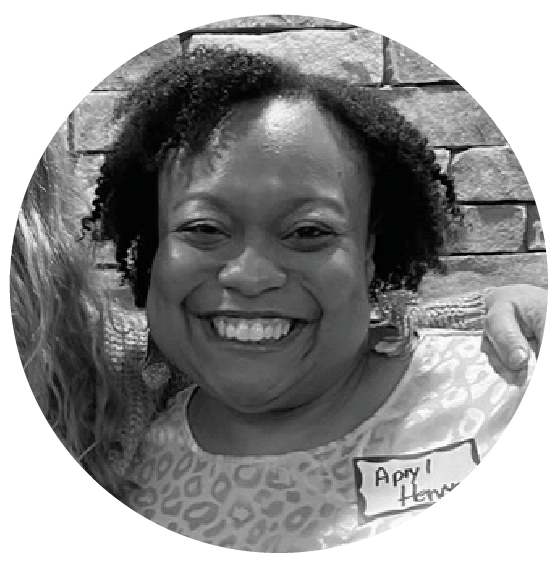
Apryl Henry, David Consalvi and Kathryn Gibb
Apryl Henry is an English Teacher at River Bluff High School
David Consalvi is the STEAM Coordinator at South Pointe High School
Kathryn Gibb is an English Teacher at River Bluff High School
Lexington School District teachers Apryl Henry and Kathryn Gibb and Rock Hill School District teacher David Consalvi saw South Carolina’s competencies make learning practical and boost student belonging, self-efficacy and growth. Through coaching cycles, they learned to integrate the competencies authentically, connecting skills like communication to real-world applications. While more teacher training is needed, students are embracing the competencies to navigate conflicts, explore identity, set goals and take ownership of personalized projects that unlock engagement. By prioritizing cross-cutting skills over rote knowledge, the competency approach builds a growth mindset for self-directed learning. As one student exemplified in outreach to a local business, the competencies empower students as self-advocates.
On educator engagement
David says: “We started the month with an idea, a tool, a training, a PD, a resource, whatever..they got to familiarize themselves with it, learn how to apply it and something they could apply and then put it into practice. They had a couple of weeks where they would actually utilize whatever they learned. And then we get to come back two weeks later, and there’s a share out. And so it was the opportunity then for each teacher to take – how that went, what worked, what didn’t work – ideas from each other.”
Apryl says: “I think there needs to be more professional development on it. I think also, new teachers need to just be introduced to it. Because I currently have an intern. And I just told her, ‘Hey, we use competencies in this class…’. And so now she’s just speaking in the language.”
On student skill development
Kathryn says: “I have one student who had a conflict with her mom, so she was filling out her journal today. She did that navigating conflict piece, which gives sentence starters to kind of think through that conflict and what’s the best [approach], how do I feel about it? How does the other person feel about it and what’s the best course of action moving forward?”
David says: “Our focus needs to be more on the skills that allow someone to be a learner and to be an effective communicator – to be effective across the skills within the competencies. Then the individual content becomes almost secondary. And so for the kids, they’re able then to keep up instead of being stuck with a particular, you know, mindset that’s not going to allow them to grow. So it builds in a little bit of that growth mindset. That efficacy just gives them more success.”
On students taking ownership of their learning
Apryl says: “The competencies that we use in that class are advocating for myself, navigating conflict, identity, and setting goals and monitoring progress, like those are the ones that we thought that freshmen really need. So with the identity one, you know, they are definitely trying to figure out who they are as freshmen.”
Apryl says: “We just got finished writing press releases for the school and now we are doing stuff for Black History Month – but each kid is doing something different for Black History Month, so I have some kids who are working on a display in the library, I am getting just a more, like, a wider variety of things because it is very, very personalized. And the kids are so engaged, like one kid is reaching out to a black-owned business, and she’s going to do a social media campaign for them.”
Dr. Lee Green
Director of the Floyd D. Johnson Technology Center
Dr. Green is committed to building his students’ independence and self-management skills – and he understands the practical impact this will have on their marketability to employers and the benefits it will bring to their community. He sees how the competencies help support the execution of technical abilities, particularly in the context of real job prospects.
As a site leader, he also believes in putting the learner at the center when it comes to both high school level and adult growth, such as teacher capacity-building that is supported with a personalized approach to coaching.

“[…] it puts the child at the center of learning. The children create their own learning by going through this process. Instead of them waiting on their teacher to give them the answers or tell them which direction to go, they have to go out and find it.”
“Those are all the things that, and the rest of the competencies, those are the things that our employers ask that they have when the student comes out. The technical skills, we can teach that all day long, but it’s those soft skills, those things, like those competencies, that’s what the employers are looking for.”
“When reDesign came along with a competency base, what it did was it took those standards, those competencies in the South Carolina Profile and gave it a more relevant everyday language that everybody could get behind.
“[…] it puts the child at the center of learning. The children create their own learning by going through this process. Instead of them waiting on their teacher to give them the answers or tell them which direction to go, they have to go out and find it.”
“Those are all the things that, and the rest of the competencies, those are the things that our employers ask that they have when the student comes out. The technical skills, we can teach that all day long, but it’s those soft skills, those things, like those competencies, that’s what the employers are looking for.”
“When reDesign came along with a competency base, what it did was it took those standards, those competencies in the South Carolina Profile and gave it a more relevant everyday language that everybody could get behind.
Jasmine and Tony
High School Juniors at Floyd D. Johnson Technology Center
Tony and Jasmine are just one example of learners within one particular program at Floyd D. Johnson that focuses on preparing students for careers in the Early Childhood Education field. But, they stand out for their clear understanding of the skill sets that are embedded within their learning process, their awareness of the ways competency development has challenged them to become more self-sufficient, their belief in their capabilities, and their motivation to figure out problems more independently.
“I was really proud of how independent I was because I’m so used to teachers being right by my side holding my hand and telling me everything that I need to do and giving me all of my resources.“
JASMINE
“[…] having to find the questions yourself that you need to ask – it most definitely prepared me for whenever I go into college or even got into the world and I need to research something.
TONY
“I was really proud of how independent I was because I’m so used to teachers being right by my side holding my hand and telling me everything that I need to do and giving me all of my resources.“
JASMINE
“[…] having to find the questions yourself that you need to ask – it most definitely prepared me for whenever I go into college or even got into the world and I need to research something.
TONY
“I was really proud of how independent I was because I’m so used to teachers being right by my side holding my hand and telling me everything that I need to do and giving me all of my resources.“
JASMINE
“[…] having to find the questions yourself that you need to ask – it most definitely prepared me for whenever I go into college or even got into the world and I need to research something.
TONY
Competency-Based Learning in Action

Dive into 14 different mini snapshots of implementation in action from around the state – including a template for schools that want to capture their own snapshots of competency-based learning in their community!
Hear educators Apryl Henry & Britt Collins chat about their work around CBL – and then check out practical examples of “Scaling and Spreading Equitable Practices Through the Profile of a South Carolina Graduate Competencies” from their work at River Bluff High School, including sample rubrics.
Hear River Bluff math teachers Jennifer Gibbons & Andrea Moore explain their view towards “Growth Over Grades” on the PersonalizeSC podcast, including linked examples of how to help students track their progress using the competencies.

Check out the Educator Voices featured in data from our Community of Practice participants!
Competency-Based Learning in Action
Dive into 14 different mini snapshots of implementation in action from around the state – including a template for schools that want to capture their own snapshots of competency-based learning in their community!
Hear educators Apryl Henry & Britt Collins chat about their work around CBL – and then check out practical examples of “Scaling and Spreading Equitable Practices Through the Profile of a South Carolina Graduate Competencies” from their work at River Bluff High School, including sample rubrics.
Hear River Bluff math teachers Jennifer Gibbons & Andrea Moore explain their view towards “Growth Over Grades” on the PersonalizeSC podcast, including linked examples of how to help students track their progress using the competencies.
Check out the Educator Voices featured in data from our Community of Practice participants!
“My teacher gives me motivation in this class. He tells me I have a bright future and that I will make it in life and I really appreciate [him] for that. He’s a real one.”
STUDENT