
Life Cycle of a Competency Framework
Life Cycle of a Competency Framework
Through a meticulously designed process involving stakeholder input, research-backed competency design, educator capacity building, and continuous refinement based on implementation data, South Carolina brought to life a visionary competency-based education framework that personalized learning by prioritizing the cross-disciplinary skills students need to thrive.
Competency Framework
Developed a robust competency framework aligned with South Carolina’s Profile of a Graduate, providing a clear roadmap for educators.
Intensive Support
Offered ongoing coaching and support within and across schools and districts, empowering educators to implement competency-based learning effectively.
Leadership Development
Created a fellowship program for education leaders and coaches, building capacity and expertise in competency-based learning.
Resource Development
Developed practical resources, including a guide to measuring personalized, competency-based learning, equipping educators with the necessary tools.
Competency Framework
The design of the framework was stakeholder driven, resulting in a holistic, student-centered approach to personalized competency development. There are several publicly available resources for exploring the end result, including competency tours, in-depth and summary versions of the PSCG Competency Framework, and “First Steps: A Teacher’s Guide to Competency Implementation”.

Intensive Support
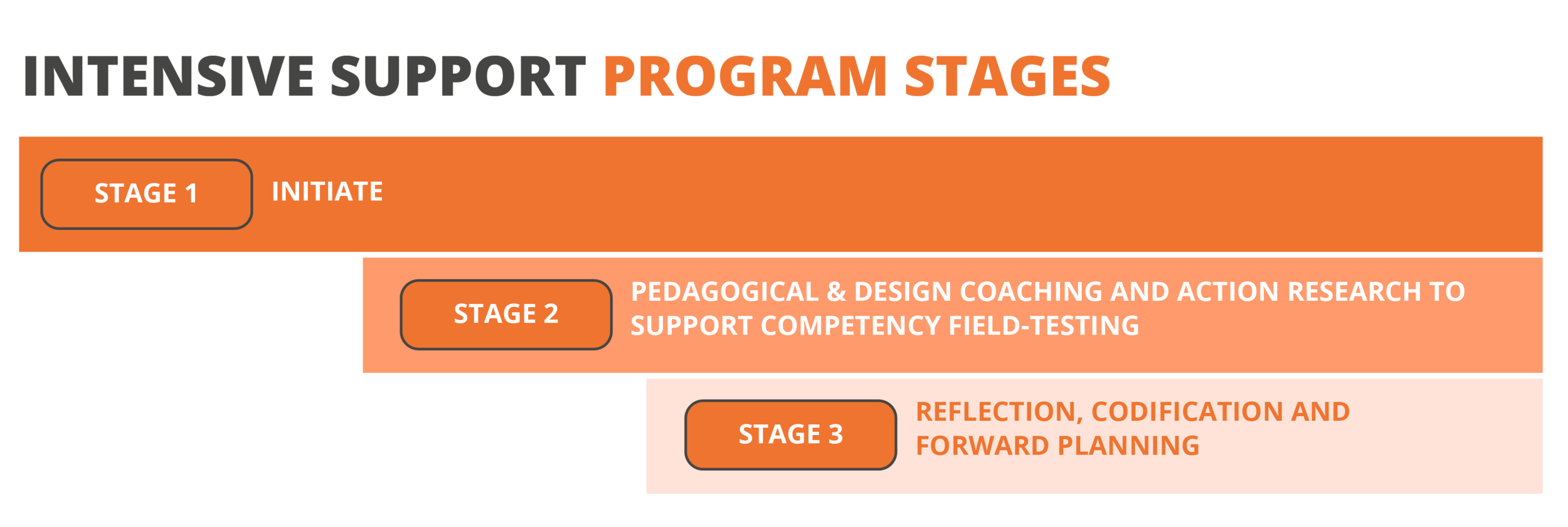
School sites and districts opted into an intensive support program that provided coaching to leaders and teachers who wanted to put the competency framework into action by integrating it into their instructional and assessment practices. Support offered at sites since 2019 included:

Strategic planning assistance for leaders
Customized pathways for educators according to self-identified implementation goals
Engaging educators in action-research and co-learning
Field testing of selected competencies with support from long-term coaches
Community showcases & reflection opportunities
Educators also participated in co-led implementation workshops across participant networks and cohorts; you can gain a sense of the value of these workshops through “What Makes the Implementation Workshops Work?”, which incorporates participant data and information about the design and structure of these high-quality professional learning experiences.
Other related opportunities included our Community of Practice courses, which broadened the reach of our efforts and exposed more educators beyond intensive support participants to key elements of the Framework and practical resources.
Leadership Development
The SC Competency Fellowship was a hallmark of support for competency-based learning on a systemic level, bringing together leaders, coaches, and teachers during two cycles of year-long cohorts. Selected Fellows from throughout the state were grouped by affinity with others in a similar role, whether that was an elementary educator, a district coach, or a school administrator.
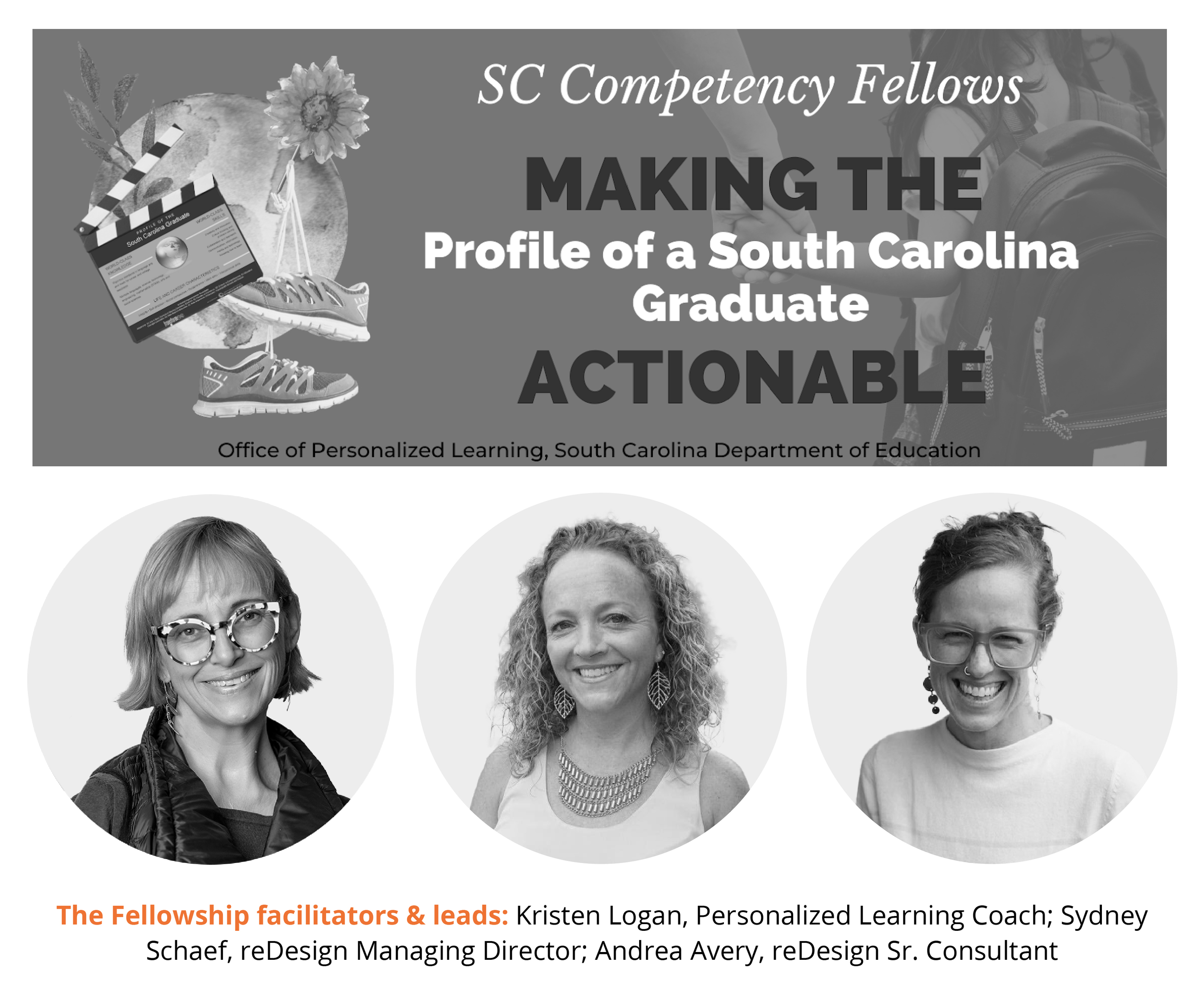
As an offering from the SC Department of Education Personalized Learning Team in partnership with reDesign, the overall goal was to, “learn, practice, and integrate the Profile of the South Carolina Graduate competencies into our designs and practices to help ensure all learners have equitable opportunities to achieve the Profile of the South Carolina Graduate”. The Fellowship’s core learning areas aligned with that purpose:
defining learning outcomes that integrate PSCG Competencies and Academic standards
building a culture of learning, efficacy, and community
designing performance tasks that create opportunities to learn and demonstrate competencies and academic knowledge
designing learning experiences that support skill development and align to and build toward unit/project learning outcomes
the pedagogy of personalized, competency-based learning
the design of assessment and reporting systems
change leadership strategy and planning.
There were four key ways that the Fellowship facilitated learning: 1) flexibly-paced pathways through four online learning modules, 2) live (“synchronous”) learning sessions and and in-person workshops that focused on new material and collaborative learning activities, 3) flexible Affinity Groups for cohort members to engage in collaborative learning and peer support, and 4) helping each participant develop a portfolio of learning that they could take with them into their teaching and learning context.
The focus was on educator competency – e.g., in areas like designing or adapting curriculum – along with change leadership skills – e.g, strategically activating leaders or improving adult development. In addition, Fellows built a professional network of other experts and learners, and contributed to building momentum around the PSCG framework.
Resource Development
Educators receiving intensive support, workshop attendees, Fellows, and interested teachers and leaders browsing resources online all received access to a diverse array of support materials that were based directly on participant needs. Resources were based on input from the field, and one of the most significant needs was a natural next step in implementation – answering the question of how educators would know if the competency framework was having any impact, and if students were actually gaining the skills that it elevated.

The Measuring PCBL Toolkit was one resource that was created to provide research instruments and evaluation tools that schools and districts can use to measure development along a progression and gauge students’ and teachers’ engagement, agency, and competency growth throughout the process. Some tools are more systemic, and others are tied to particular instructional or assessment practices in the classroom.
Check out our PCBL Resources section for other implementation tools informed by educators, for other educators.
Reflections on Personalized Learning in South Carolina
Sydney Schaef, Managing Director at reDesign, shares her reflections on the journey of supporting personalized competency-based learning in South Carolina, highlighting the state’s bold approach, commitment to ongoing learning and adaptation, and promising early results in nurturing student agency.
The Why Behind the Approach
How did South Carolina land on a competency-based approach, and what distinguishes this type of framework for teaching and learning? Why does reDesign promote integrating future-ready skill development across the curriculum? And, as we establish a PCBL system, can we effectively support educators in personalizing students’ learning and measuring their progress?
Our research review speaks to the foundational elements that informed the success of this massive, state-level reform effort, which incorporated systems level change and capacity-building with what we know about how learners acquire key skill sets.

“Before competency-based learning, I struggled with finding material and words that would help my students learn the lessons provided, but now I can utilize the competencies to make my standards relatable and professional at the same time. The competencies provide a different lens on how to view the basic SC Standards and make them understandable.”
EDUCATOR
Explore this roundup that highlights the evidence behind the importance of each of the PSCG Competencies.